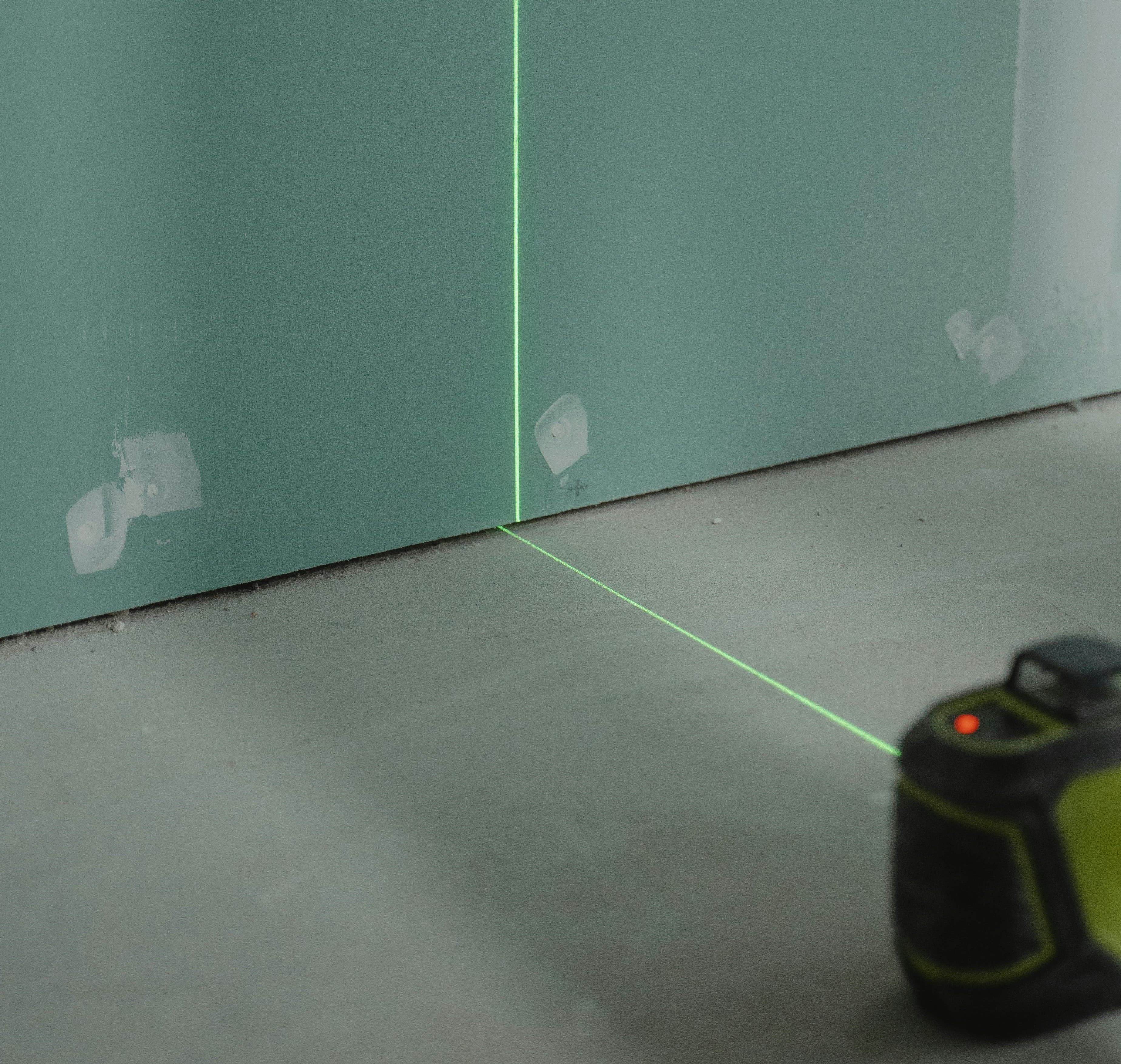
Floor leveling is one of the most important stages of home renovation. Few things affect both living comfort and floor material durability as much as substrate flatness. In Finland, where laminate, parquet, tile and linoleum are commonly used, the thoroughness of the base work determines the quality of the result. Floor leveling is an important step before floor installation or installation of laminate and parquet. A leveled floor not only looks good but also lasts for decades.
Why is floor leveling necessary?
An uneven floor may seem like a small problem, but its consequences quickly become apparent. Laminate and parquet begin to squeak, locks break. Tiles may fall off or break, and soft materials such as vinyl or linoleum reveal every depression and bump. Furniture stands crooked, doors don't close properly and the whole interior appearance suffers. In addition, an uneven floor can even lead to moisture problems when floor material seams don't stay tight.
Therefore, floor leveling is always an investment in home longevity and living comfort. Leveling also increases property value and makes the renovation long-lasting.
Most common methods of floor leveling
There are several techniques for floor leveling. The right choice depends on the floor's condition, the room's purpose and what kind of floor covering is coming.
Traditional wet screed is made from cement-sand mixture. It is particularly suitable for large height differences and gives a very durable surface. The disadvantage is the long drying time, which can be several weeks.
Semi-dry screed is a more advanced solution that uses less water. It dries faster and is less prone to cracking, which is why it is often preferred in apartment buildings.
Self-leveling compound is many home renovators' favorite. It spreads on its own forming a smooth surface and is suitable for smaller irregularities. The work goes quickly and drying time is short.
Dry screed is based on installing boards, for example, on top of aggregate. The advantage is speed and no wet work stages. At the same time, floor thermal and acoustic insulation is improved.
Board and plywood solutions are particularly suitable for wooden houses and projects where floor height is not critical. They enable fast and cost-effective leveling but take a little room height.
How floor leveling proceeds
The leveling work should be started with careful preparation. First, old coverings and all loose material are removed. The surface is vacuumed, washed and any deep holes are filled with mortar. This stage is important because only a clean and sound base ensures that the new screed adheres properly.
Next, the base is treated with primer, which binds dust and improves compound adhesion. For concrete floors, this stage is particularly important. If wet or semi-dry screed is used, guides are installed with which the entire surface is brought to the same level.
The actual leveling is done with the chosen method. In cement-based solutions, the mixture is spread with a trowel or pulled with guides. Self-leveling compound, in turn, is poured onto the floor and spreads on its own. To remove air bubbles and level the surface properly, a spiked roller is used.
Once the screed is spread, the drying stage begins. Drying time varies from a few hours to several weeks depending on the method and layer thickness. During this time, the floor should not be loaded and the room should not have drafts. Finally, the surface can be lightly sanded and primed again before installing the final floor covering.
Floor leveling for different floor materials
Different floor materials set different requirements for leveling. Laminate and parquet require an almost perfectly smooth base, because even small irregularities show as squeaking and broken lock joints. Linoleum and vinyl are soft, so they reveal every bump if the base is not done properly.
For tiles, it's most important that the base is completely stable. Although small differences can be corrected in tiling with mortar, large irregularities must be leveled in advance. In basements and on balconies, moisture-resistant solutions are emphasized. In wet areas such as bathroom renovation and toilet renovation, floor leveling is particularly important.
Special cases and challenges
In Finnish homes, floor leveling has its own special challenges. In old buildings, surprises can be found, such as moisture or settlement. In such cases, professional help is often needed. In wooden houses, floor leveling with boards is a common solution, but at the same time it's important to ensure good ventilation so structures don't start to rot.
In multi-story buildings, acoustic insulation must also be considered. In this case, floating screed solutions can be used that aren't directly attached to structures.
When to rely on a professional?
Light irregularities can be leveled on one's own, but professional help is needed if the floor is significantly uneven, if height differences are over three centimeters, or if there are moisture or structural problems in the space. Also when renovation is done in a housing cooperative apartment, professional work guarantees that requirements and regulations are met.
Summary
Floor leveling is a work stage that defines the success of the entire renovation. It's not just a technical detail, but a base that ensures floor covering durability and living comfort for years to come. In Finland, several methods are used – wet and semi-dry screed, self-leveling compounds, dry screed and board installation – and each has its place.
When floor leveling is done carefully and with the right chosen method, the result is beautiful, durable and practical. If you need help with other renovation work or want a comprehensive solution, contact our experts.